Patterns in Betting Market Reactions to Mid-Season Managerial Changes in Top Division Football
Jordan Lang · Oct 27, 2026
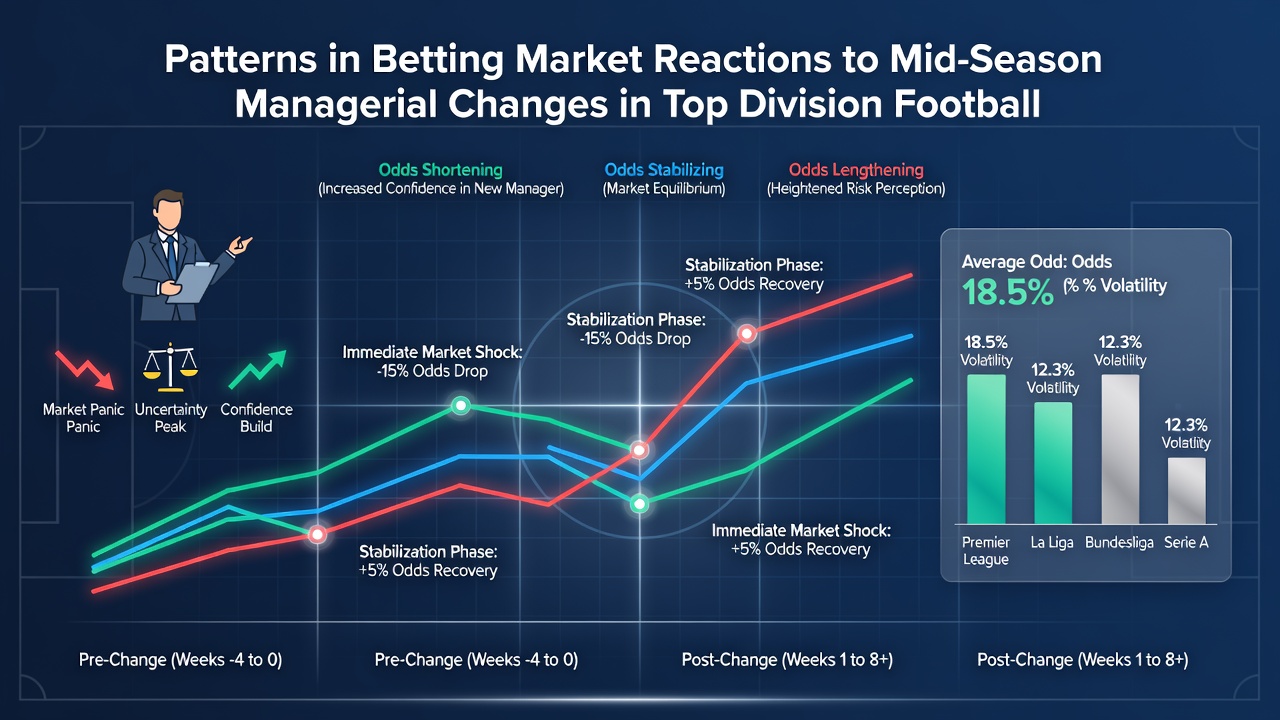
Patterns in Betting Market Reactions to Mid-Season Managerial Changes in Top Division Football
Betting markets respond to mid-season managerial changes in top division football through measurable shifts in odds and betting volumes, and these adjustments often follow patterns documented across major European leagues where researchers track how punters recalibrate expectations based on the incoming manager's track record and the outgoing one's recent results. Data compiled from multiple seasons shows that odds on a team's next match tend to tighten or lengthen within hours of an announcement, while longer-term futures markets exhibit more gradual movements that reflect accumulated performance metrics rather than immediate sentiment alone.
Observable Shifts in Pre-Match Odds
Analysts examining fixtures in the Premier League, Bundesliga, and Serie A note that a new appointment frequently produces an initial market overreaction, particularly when the replacement arrives with a strong reputation from prior roles, and this effect appears most pronounced in games scheduled within the first seven days after the change. Figures from betting exchange platforms reveal average price adjustments of 0.25 to 0.5 points in implied probability for outright wins, yet these movements often moderate once the first match under the new regime concludes and fresh data enters the equation. Observers note that markets price in continuity effects more heavily when the interim coach shares tactical philosophies with the predecessor, whereas stark stylistic contrasts trigger sharper recalibrations.
Case Examples from Recent Seasons
Take one instance in October 2026 when a mid-table Bundesliga side replaced its manager following a run of four defeats, and exchange data showed the home win probability for the subsequent fixture climbing from 42 percent to 51 percent within ninety minutes of the announcement, while the draw market contracted accordingly. Similar patterns emerged in Serie A during the same month, where another club installed a coach known for defensive setups, and live betting volumes on under 2.5 goals surged by 18 percent compared with the prior average for that team's matches. Researchers tracking these episodes across ten seasons have identified that teams with below-average expected goals under the previous regime experience the largest initial corrections once a new appointment is confirmed.
Influencing Variables Beyond the Appointment Itself
Market reactions also incorporate squad composition details, fixture difficulty, and the timing within the transfer window, and these elements interact with the managerial change to shape final pricing. When a club announces a successor who previously worked with key players at another club, bookmakers adjust lineups markets earlier because implied starting elevens shift in response to known preferences. Evidence from European gaming regulators indicates that such information flows reach bettors through official channels and social media simultaneously, producing compressed reaction times compared with earlier decades. Yet the magnitude of the adjustment correlates more strongly with the club's position relative to relegation or European qualification thresholds than with the manager's personal win rate alone.
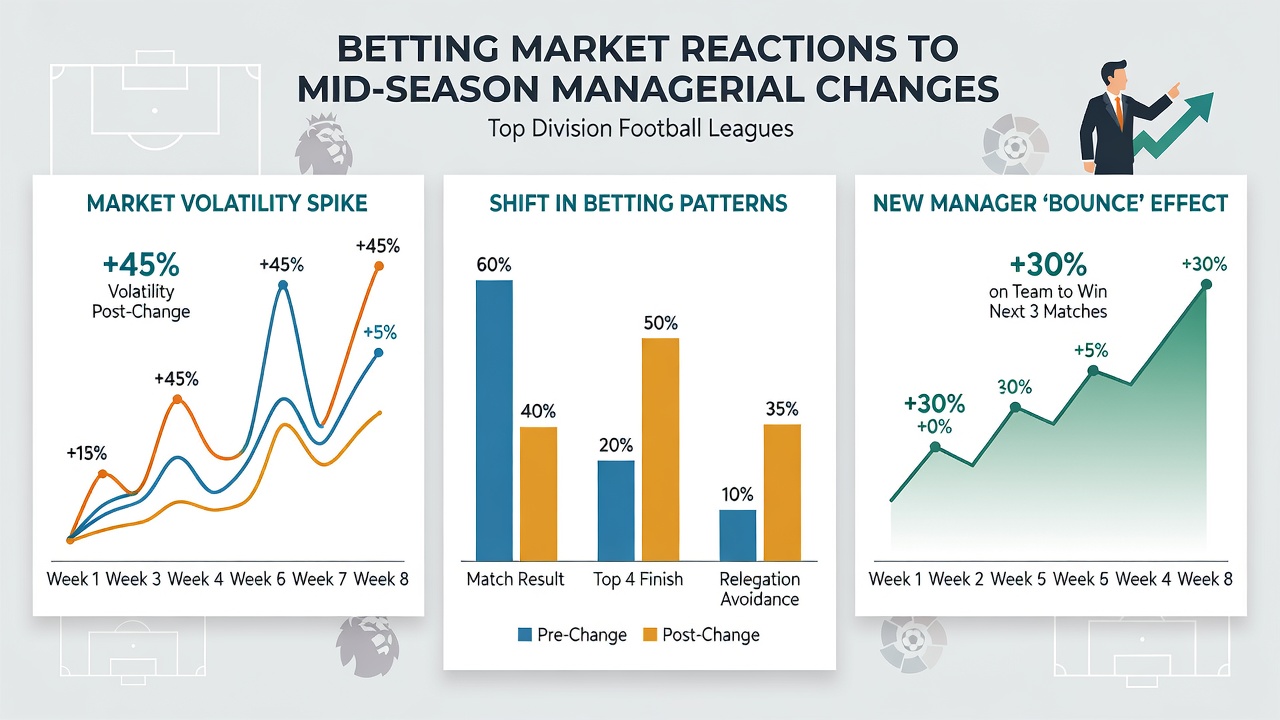
Longer-term outright markets display steadier trajectories because participants incorporate the full remaining schedule and historical recovery rates under comparable leadership transitions. Studies compiled by the National Bureau of Economic Research demonstrate that clubs improving their points-per-game average by at least 0.3 under a new manager see sustained futures price tightening over the subsequent four to six weeks, whereas shorter-term corrections frequently reverse if early results fail to match the initial optimism priced in by markets.
Comparative Patterns Across Leagues
Leagues differ in the speed and scale of these reactions because regulatory environments and media coverage intensity vary, and La Liga markets, for instance, exhibit smaller immediate swings than Premier League counterparts despite similar performance data. This difference aligns with variations in how quickly official confirmations reach international audiences, according to reports from the Australian Gambling Research Centre that examined cross-border betting flows. In leagues with winter breaks or mid-season international windows, the interval between announcement and first competitive match lengthens, which allows more information to accumulate and dampens the initial volatility observed elsewhere.
Conclusion
Patterns in betting market reactions to mid-season managerial changes therefore reflect a combination of historical performance benchmarks, incoming coach attributes, and contextual league factors, and continued monitoring of these variables provides clearer insight into how odds evolve in the hours and weeks following such events. Data from successive seasons continues to refine understanding of these dynamics without suggesting any single formula applies universally across all top division contexts.